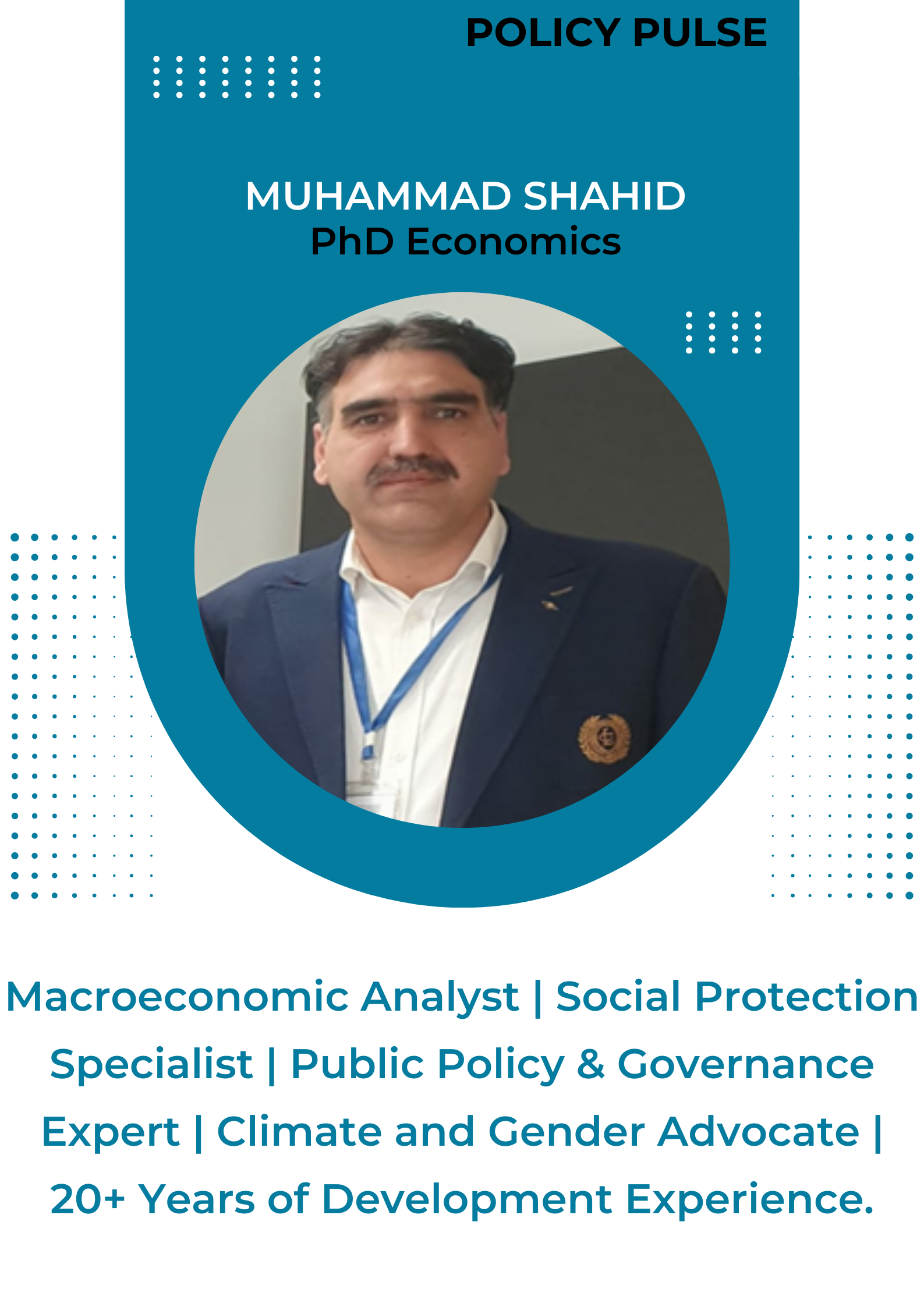
Dr. Muhammad Shahid
| Nepal stands at a critical juncture where its developmental trajectory is increasingly constrained by structural weaknesses, elite capture, and persistent socio-economic vulnerabilities. While the country has made incremental progress in human development indicators over the past decades, recurrent political instability and entrenched governance failures have undermined the foundations for sustainable recovery and inclusive growth. The present moment may be aptly described as Nepal’s breaking point, where survival and long-term resilience depend on systemic reforms. Elite Capture and Institutional Weakness: One of the most pressing challenges in Nepal is the persistence of elite capture of political and economic institutions. Decision-making processes are often monopolized by powerful political families, business groups, and rent-seeking bureaucratic networks, resulting in distorted policy outcomes. Public resources, including foreign aid and development finance, are disproportionately directed toward urban elites or politically aligned constituencies rather than being equitably distributed. This phenomenon not only perpetuates inequality but also erodes trust in state institutions, thereby deepening citizens’ sense of marginalization. Poverty and Unemployment: Despite improvements in poverty reduction statistics over the past two decades, Nepal continues to face widespread poverty and underemployment. Structural transformation of the economy has remained limited. Agriculture, which employs the majority of the workforce, is characterized by low productivity, subsistence farming, and limited market integration. Formal employment opportunities are scarce, forcing many young people to seek livelihoods abroad. Remittances, while constituting a critical lifeline for household survival, have created a dependency that masks the absence of sustainable domestic job creation. Consequently, unemployment and vulnerable employment remain acute, particularly for youth and women. Exploitation and Social Inequality: The crisis in Nepal is also fueled by patterns of social and economic exploitation. Marginalized communities including Dalits, indigenous groups, and residents of geographically isolated regions face systematic barriers to access education, healthcare, and political participation. Gender-based discrimination continues to limit women’s ability to fully participate in the labor force or access property and credit. Such structural inequalities perpetuate cycles of vulnerability, leaving large sections of society exposed to economic shocks, natural disasters, and climate-induced risks. Governance Deficits and Political Instability: Frequent government changes, fragile coalition politics, and policy inconsistency have further undermined recovery prospects. Governance deficits manifest in weak implementation capacity, corruption, and inadequate service delivery. As a result, Nepal struggles to mobilize domestic resources effectively or utilize international support in ways that strengthen resilience. The absence of coherent, long-term strategies to address inequality and unemployment means that recovery efforts often remain reactive rather than transformative. To overcome its breaking point, Nepal must adopt a multi-pronged strategy. First, dismantling elite capture requires institutional reforms to strengthen transparency, accountability, and equitable resource distribution. Second, poverty and unemployment can only be addressed through diversification of the economy, investments in skills development, and promotion of labor-intensive industries. Third, social justice demands targeted interventions to reduce exploitation and inequality, particularly for women, rural poor, and marginalized groups. Finally, resilience depends on embedding these measures within a framework of political stability and sound governance, capable of withstanding both domestic pressures and external shocks. The Bottom Line Nepal’s survival and recovery hinge not merely on economic growth, but on the quality and inclusiveness of its governance model. The challenge is not only to mitigate poverty and unemployment, but to address the deeper structural drivers including elite capture, exploitation, and institutional fragility that have long obstructed equitable progress. Without such transformations, Nepal risks perpetuating a cycle of vulnerability, making the current breaking point not just a temporary crisis, but a prolonged condition of instability. |