
Dr. Muhammad Shahid & Rehan Khalid
On July 29, 2025, the International Monetary Fund released its latest World Economic Outlook Update, projecting that global growth will decelerate to 3.0 percent in 2025 and then edge slightly higher to 3.1 percent in 2026, both figures falling below the 3.3 percent rate recorded in 2024 and also shy of the pre‑pandemic average of 3.7 percent. The modest rebound compared to April’s projections is largely attributed to front‑loading of imports before tariffs, lower-than‑expected effective U.S. tariff rates, improved global financial conditions, and fiscal stimulus in key economies.
Crucially, the IMF emphasizes that much of this near‑term resilience reflects temporary trade-related distortions, which are now fading. As these distortions unwind, they are expected to weigh on growth moving forward, signaling that the current strength is not sustainably rooted in underlying fundamentals. With elevated uncertainty around trade policies, geopolitical tensions, and potential tariff rollbacks still looming, the IMF cautions that the deceleration in global growth could intensify unless confidence and predictability are restored through durable policy frameworks and trade agreements.
IMF projects Pakistan’s GDP growth at 3.6 percent in fiscal year 2025–26, notably below the government’s official target of 4.2 percent. This modest forecast reflects several binding constraints including sluggish performance in agriculture and large‑scale manufacturing, structural bottlenecks in export competitiveness, and weakening domestic demand due to constrained consumer purchasing power. Furthermore, the economy continues to be burdened by high public debt, low tax-to-GDP ratios, and limited fiscal space, inefficiencies in revenue mobilization and under‑implementation of sectoral reforms hamper investment and dynamism. We have seen in the previous months that interest rate cuts have provided some relief, they have yet to spark robust private-sector activity. Additionally, fiscal austerity measures tied to the IMF programme, tight credit conditions, and unstable foreign exchange reserves further dampen growth momentum.

sWe know that Pakistan’s economy is burdened by high external debt and a growing circular debt, both of which hinder sustainable development and economic competitiveness. We have witnessed that Pakistan spends a significant portion of its revenues on debt servicing, crowding out investments in infrastructure, education, and innovation. To address this, Pakistan must adopt a multi-pronged strategy focusing on fiscal discipline, energy sector reforms, and export-led growth.
Reducing external debt begins with improving domestic revenue mobilization. Broadening the tax base, digitizing the tax system, and curbing tax evasion can boost revenues, reduce reliance on external borrowing, and create space for development spending. At the same time, prioritizing concessional borrowing and restructuring existing high-interest loans through diplomatic and multilateral engagement can ease repayment burdens.
The country’s circular debt, largely rooted in inefficiencies in the energy sector, exceeds 2.5 trillion rupees and continues to rise. Resolving it requires comprehensive energy sector reforms, including reducing line losses, improving bill recoveries, transitioning to cheaper, renewable energy, and revising unsustainable power purchase agreements. These steps will reduce the cost of electricity, enhance energy security, and attract industrial investment.
Furthermore, to make Pakistan more competitive globally, the government must also focus on export diversification, improving ease of doing business, and enhancing skills development. Investment in logistics, digital infrastructure, and vocational training can increase productivity and reduce transaction costs for exporters. Public-private partnerships and targeted incentives in technology, agro-processing, and textiles can stimulate value-added exports.
The above challenges and policy recommendations to address them require strong governance, bold reforms, and long-term vision. By aligning fiscal responsibility with sectoral modernization, Pakistan can pave the way for sustainable growth and resilience in an increasingly competitive global economy.
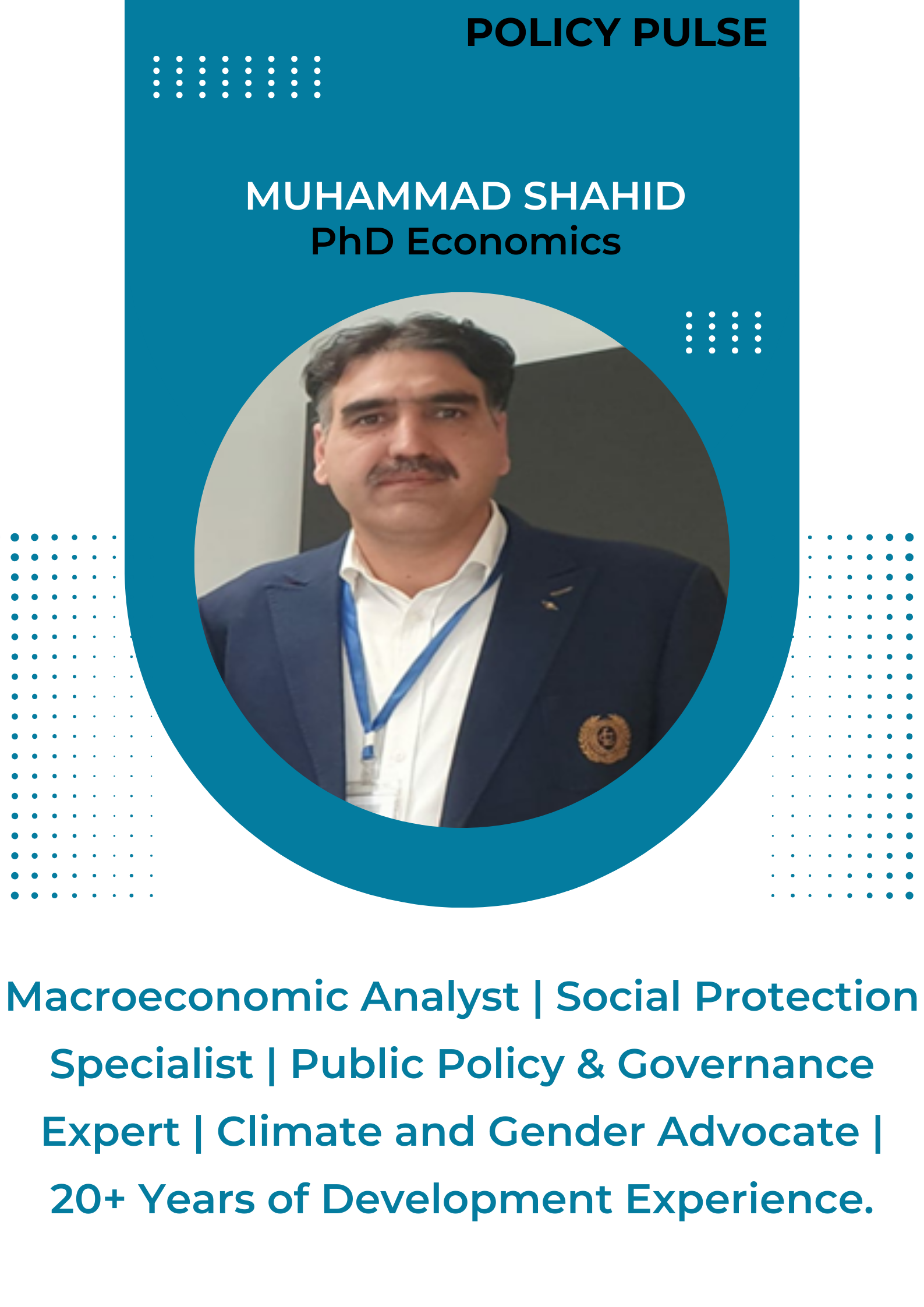
Dr. Muhammad Shahid has a PHD degree in Economics from PIDE, with over two decades of experience & expertise in research, development, governance, and political economy, gender-responsive budgeting and climate change resilience, bridges data-driven insights with transformative action. Rehan Khalid is a seasoned data analytics expert with over two decades of experience, driving evidence-based solutions across national and international organizations. His strategic insights and analytical precision have consistently transformed complex data into actionable development impact


Taufeeq khalid
Hard work
Deep analysis ,highly appreciated
Abdul Zahir
Laly zabrdast. Very informative